Fact Check
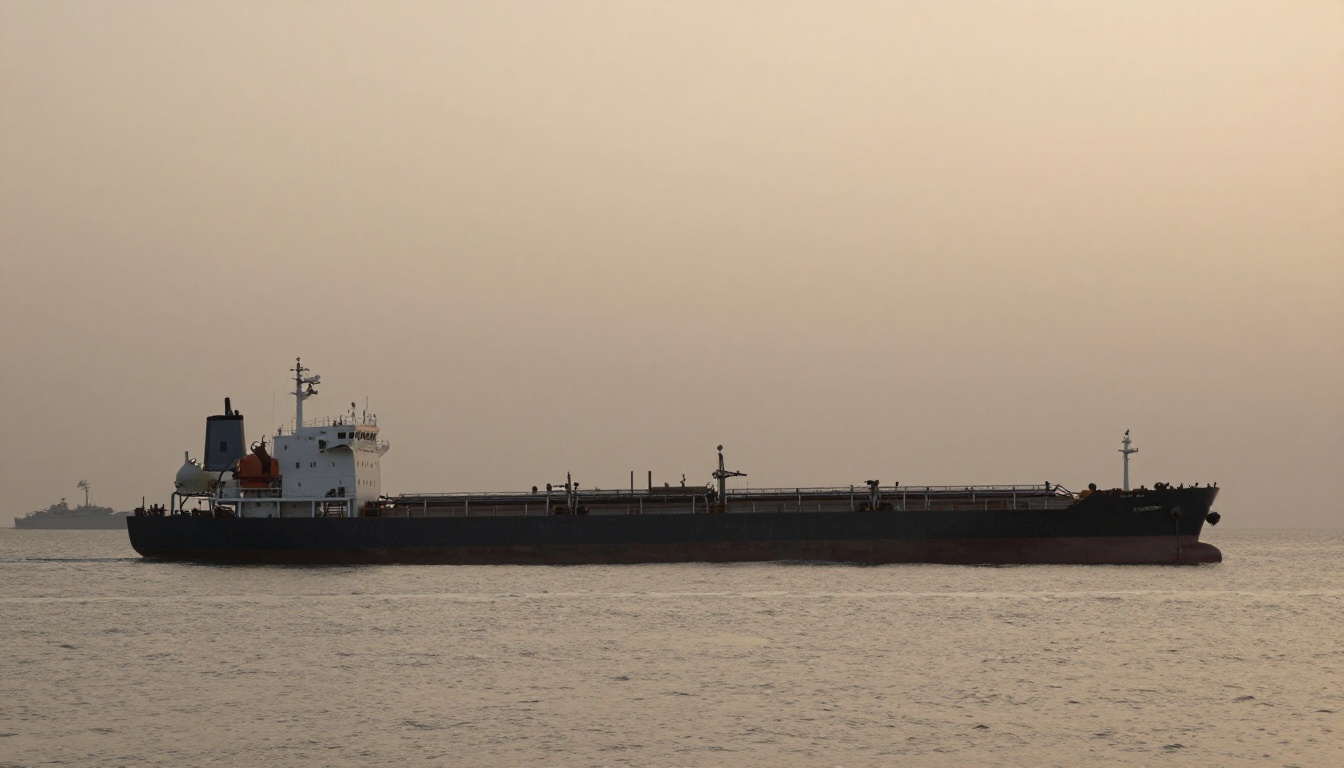
What’s true about the US naval blockade tightening on Iran’s oil
What the video says
Cash Jordan’s video, posted as the US-Iran conflict enters its third month, argues that President Donald Trump has won the standoff by economic strangulation rather than full-scale war. The narrator splices together clips of Trump, Treasury Secretary Scott Bessent and various commentators to make the case that a US naval blockade is about to fill up Iran’s main oil terminal at “Car Island,” force Iranian wells to be shut in, and inflict permanent damage on the country’s oil reservoirs.
The video also frames the blockade as a squeeze on China — which it says buys 90% of Iran’s oil — and claims three US carrier strike groups, including the USS Bush and USS Boxer, are now closing in on Iran. It quotes Trump saying he would not use a nuclear weapon, asserts that Iran is losing $500 million a day, and says US forces have intercepted three Iranian-linked tankers in 72 hours in the waters around India, Malaysia and Sri Lanka.
The “Car Island” the video keeps referring to is Kharg Island, Iran’s main offshore oil-loading terminal in the northern Persian Gulf. The auto-transcript appears to have mangled the name throughout.
Checking the claims
Claim 1: Trump said he would not use a nuclear weapon against Iran and called the question “stupid.”
Verdict: TRUE
On Thursday, April 23, 2026, during an Oval Office event, PBS NewsHour correspondent Liz Landers asked the president whether he would use a nuclear weapon against Iran. Trump responded, “Why would a stupid question like that be asked? Why would I use a nuclear weapon when we’ve totally, in a very conventional way, decimated them without it? No, I wouldn’t use it. A nuclear weapon should never be allowed to be used by anybody,” according to PBS NewsHour’s clip and transcript.
The exchange was widely reported by outlets across the political spectrum. The Cash Jordan video reproduces the quote accurately, although it does not name the reporter or the date. The president’s broader point — that US forces have used only conventional weapons in the campaign against Iran — is consistent with the public record on Operation Midnight Hammer in June 2025 and the current Operation Epic Fury, neither of which used nuclear arms.
Sources: - WATCH: Trump says he won’t use nuclear weapons in Iran (PBS NewsHour) - Trump rules out using nuclear weapons against Iran (Washington Times)
Claim 2: Iran is losing about $500 million a day from the US blockade.
Verdict: PARTIALLY TRUE
The $500 million figure comes from Trump himself and is repeated by commentators in the video. According to the Wikipedia tracker on the 2026 US naval blockade of Iran, Trump publicly said the blockade was costing Iran roughly $500 million a day, while independent analysts put the number lower.
Reporting by The National, citing data from energy analytics firm Kpler, put Iran’s lost daily oil revenue at about $150 million once exports effectively fell to zero. Miad Maleki of the Foundation for Defense of Democracies has estimated total daily economic damage — including non-oil trade — at roughly $435 million, or about $13 billion a month. So the video’s $500 million-a-day figure is closer to a political talking point than to a number any independent analyst has published. The direction is right; the size is contested.
Sources: - Iran to lose $150 million a day as US blockade ends $9 billion windfall (The National) - 2026 United States naval blockade of Iran (Wikipedia)
Claim 3: Iran is “a matter of days” from having to shut its oil wells, which would cause permanent reservoir damage.
Verdict: PARTIALLY TRUE
Two separate questions are tangled here: when Iran’s storage actually fills up, and what happens if wells have to be shut in.
On timing, the “matter of days” framing comes from Treasury Secretary Scott Bessent, who has publicly said Kharg Island storage will be full within days, forcing wells offline. But other observers have been more cautious. Al Jazeera’s analysis reports Iran has roughly 20 days of onshore capacity at current production, plus 160-170 million barrels already at sea, and quotes a former US Iran analyst saying revenue flows could last into August. Reuters and Bloomberg coverage cited in the CFR backgrounder on Kharg Island similarly suggests storage limits are likely measured in “weeks rather than days.”
On the underlying engineering, the video is broadly correct that shutting in producing wells can cause lasting damage. When pressure drops and wells stop flowing, water and gas can intrude into the oil-bearing rock, and paraffin can clog tubing and pores. Industry analyses cited in Oil Price and Energy News Beat reporting warn that prolonged shut-ins, especially in older fields like Iran’s, can permanently reduce a reservoir’s recoverable volume. Trump’s specific “you can recover 50 to 60% but never have it like it is now” figure is not something any cited source confirms — it appears to be the president’s own rule of thumb rather than an engineering estimate.
Sources: - How long can Iran survive the US’s Hormuz blockade? (Al Jazeera) - Kharg Island: Iran’s oil lifeline and a tempting US target (Council on Foreign Relations) - Oil disruption of the Strait of Hormuz may be more permanent than a few weeks (Energy News Beat)
Claim 4: Three US carrier strike groups, including the USS Bush and USS Boxer, are now in or near Iran.
Verdict: PARTIALLY TRUE
The “three carriers near Iran” headline is correct, but the video gets the names wrong.
Reporting by Army Recognition and the USNI News fleet tracker shows the three aircraft carriers in or near US Central Command’s area as of late April 2026 are the USS Abraham Lincoln (in the Arabian Sea since January), the USS Gerald R. Ford (in the Red Sea), and the USS George H.W. Bush, which entered the CENTCOM area on April 23, 2026 with destroyers USS Mason, USS Donald Cook and USS Ross.
The USS Boxer is in the region, but it is not a carrier strike group. It is an amphibious assault ship (LHD-4) leading the Boxer Amphibious Ready Group, which deployed from San Diego on March 20, 2026 with the 11th Marine Expeditionary Unit (around 2,500 Marines) and the dock landing ship USS Comstock and amphibious transport dock USS Portland, according to USNI News and Stars and Stripes. Carriers and amphibious assault ships are different platforms; the video conflates the two.
Sources: - US Navy USS George H.W. Bush enters CENTCOM area as third aircraft carrier near Iran (Army Recognition) - Boxer Amphibious Ready Group, 11th MEU deploy from California (USNI News) - USS Boxer 11th MEU arrive in Hawaii (Stars and Stripes)
Claim 5: In the last 72 hours, US forces intercepted three Iranian oil tankers in Asian waters near India, Malaysia and Sri Lanka.
Verdict: PARTIALLY TRUE
US Central Command did seize three Iranian-linked vessels in the days before the video was posted, but the timing and locations the speaker gives are off.
According to Wikipedia’s running blockade tracker, the three named seizures are the Touska on April 19, the Tifani on April 21, and the Majestic X on April 23. That is three vessels in five days, not three in 72 hours. The Tifani was boarded between Sri Lanka and the Strait of Malacca, with its last signal placing it roughly halfway between Sri Lanka and Singapore, per Al Jazeera. The Majestic X was seized in the same general area, between Sri Lanka and Indonesia, according to CNN. India and Malaysia, named in the video, are not where these boardings actually happened — though the broader Indian Ocean / INDOPACOM region is correct.
The bigger picture the video draws is supported: the US has begun stopping Iran-linked tankers thousands of miles from the Persian Gulf, signalling that the blockade now extends well beyond Iranian waters.
Sources: - US forces detain Iran-linked tanker Tifani with ceasefire talks on edge (Al Jazeera) - The US-Iran war is spilling into the Indo-Pacific (CNN) - 2026 United States naval blockade of Iran (Wikipedia)
Claim 6: Iran has gone from having “the most lethal navy in the Middle East” to seizing Swiss- and Greek-owned ships like pirates.
Verdict: PARTIALLY TRUE
The factual core is correct. On April 22, 2026, Iran’s Islamic Revolutionary Guard Corps seized two foreign-flagged container ships in the Strait of Hormuz: the Panama-flagged, Swiss-managed MSC Francesca, and the Liberia-flagged, Greek-owned Epaminondas, according to Al Jazeera’s reporting on the seizures. A third vessel, the Liberia-flagged Euphoria, was fired on but escaped. Coverage from CNBC framed the seizures as Iran’s first capture of commercial ships since the war began.
The “most lethal navy in the Middle East” framing is editorial. Before the war, Iran’s navy was widely considered a serious regional asymmetric threat — heavy on small, fast attack boats and anti-ship missiles — but most analysts ranked it behind the surface fleets of Saudi Arabia, the UAE and Israel in conventional terms. So the “from feared navy to pirates” arc is rhetorical compression rather than a sourced military assessment.
Sources: - How Iran raised Hormuz stakes by capturing ships (Al Jazeera) - US-Iran war evolves into naval standoff over Strait of Hormuz after both countries seize ships (CNBC)
Claim 7: China buys roughly 90% of Iran’s oil.
Verdict: TRUE
This figure has been steady in independent estimates. According to Visual Capitalist’s analysis of Kpler shipping data and the US-China Economic and Security Review Commission’s China-Iran fact sheet, China accounts for around 90% of Iran’s crude oil exports, much of it relabelled as Malaysian or Omani to evade US sanctions. From China’s side, Iranian crude makes up a smaller share — roughly 12-13% of total imports — meaning Beijing has more flexibility than Tehran does.
Sources: - One buyer dominates Iran’s oil exports (Visual Capitalist) - China-Iran fact sheet (US-China Economic and Security Review Commission)
Bottom line
Cash Jordan’s video gets the broad outline of the situation right: the US naval blockade of Iran began on April 13, 2026, Kharg Island is the choke point because roughly 90% of Iran’s exports move through it, China is by far Iran’s biggest customer, and Trump has said publicly that he is willing to wait Iran out and that he will not use nuclear weapons. The president’s confrontation with the PBS reporter is quoted accurately.
Where the video oversells is in the details. The $500 million-a-day loss is Trump’s number, not an analyst consensus — independent estimates run from roughly $150 million in lost oil revenue to about $435 million in total economic damage. The “matter of days” countdown to forced shut-ins is the Treasury Secretary’s framing, not the analyst view, which is closer to weeks. There are three US carriers in the region, but the USS Boxer is not one of them — it leads an amphibious ready group, a different kind of naval force. And the three Iranian tanker seizures happened over five days between Sri Lanka and the Strait of Malacca, not in 72 hours near India and Malaysia.
For viewers trying to read the situation in real time, the safer summary is this: the squeeze on Iran is real and tightening, but the pace at which it bites — and the pace at which oil prices, Iranian wells and global markets actually break — is uncertain, and the loudest dates being thrown around come from political messaging on both sides rather than from independent analysis.